Small Pieces of a Larger Story
How to Style Wedding Details for Your Photographs
October 22, 2026
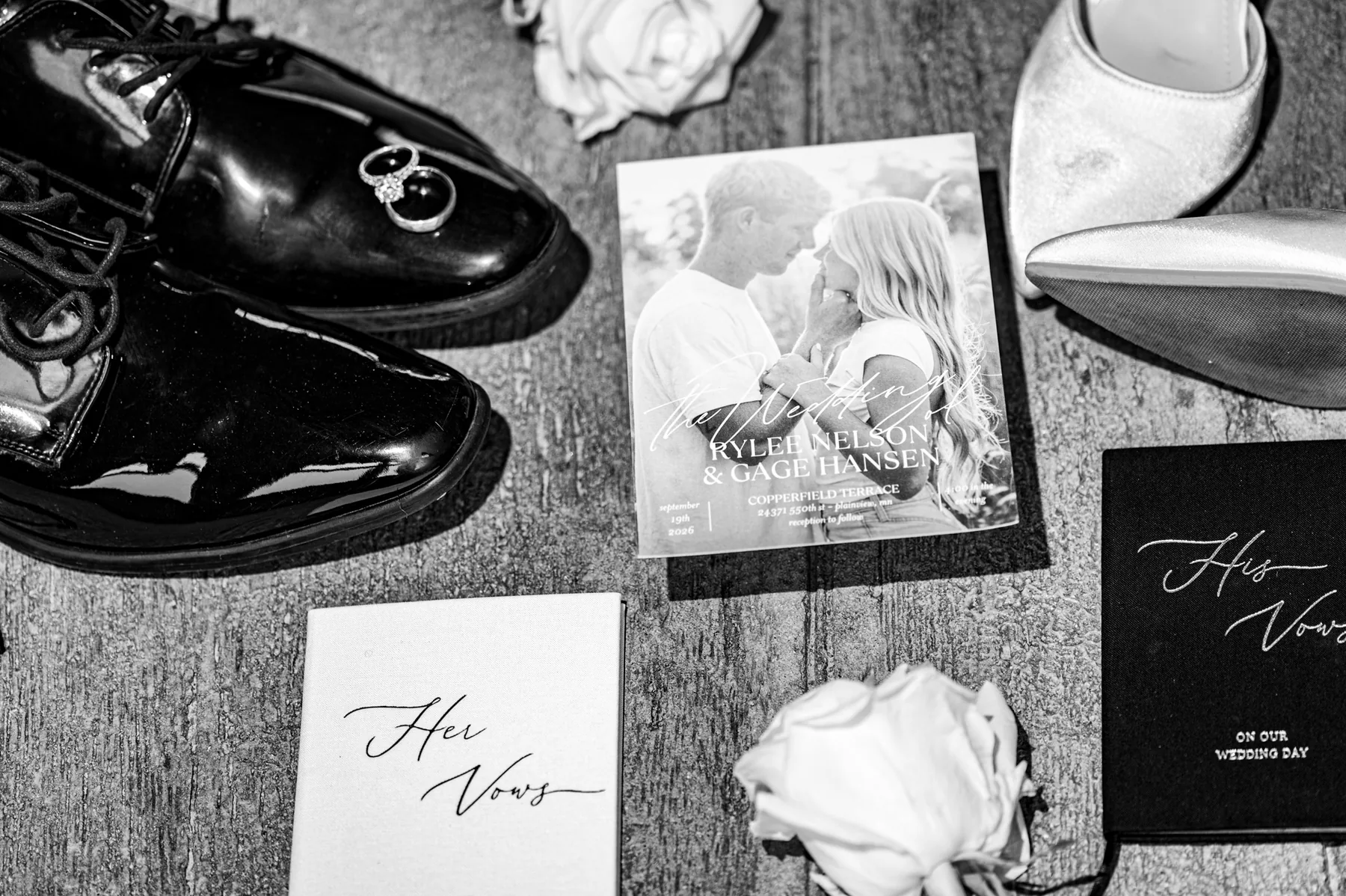
Rylee + Gage
The invitation suite, the perfume you saved for the day, your grandmother's ring, the ribbon around your bouquet — these are small pieces of a much larger story. Knowing how to style wedding details is not about making every object look perfect. It is about gathering the things that carry your history and giving them a quiet moment in the photographs.
Detail photographs create an opening note for a wedding gallery. Years from now, they can bring back the anticipation of getting ready, the texture of your dress, and the choices that made the day unmistakably yours. A little preparation lets those images feel editorial in their composition and deeply personal in their meaning.
Start With Meaning, Not a Shopping List
The most beautiful wedding details are rarely the most expensive ones. They are the pieces chosen with care: a hand-addressed invitation, a veil worn by someone you love, a watch gifted on the morning of the wedding, or a family photo tucked into a pocket.
Before the wedding, set aside the objects that feel connected to your relationship, your families, or the atmosphere you want to remember. This does not need to become an elaborate collection. A few intentional pieces are more powerful than a crowded frame of items that do not belong together.
For a wedding photographer, these details also offer visual clues about your day. The paper goods establish color and typography. Jewelry and florals introduce texture. Heirlooms bring emotional weight. Together, they create images that feel considered without feeling staged.
How to Style Wedding Details With a Cohesive Palette
A cohesive detail scene begins with a simple visual thread. Look to your invitation suite, floral palette, linens, or attire for direction. If your day is built around soft ivory, dusty blue, and warm gold, your styling pieces can quietly repeat those notes. If your celebration leans modern and architectural, clean paper, sculptural florals, and a restrained palette may feel more at home.
This does not mean every item must match exactly. In fact, too much matching can make photographs feel flat. The goal is harmony: one or two colors repeated across different materials, with enough contrast for each object to have its own presence.
Texture matters just as much as color. Silk ribbon, a raw-edge paper deckle, velvet ring boxes, handmade paper, delicate lace, and a stone or wood surface all photograph differently. Choose one or two textural elements rather than introducing everything at once. A refined image needs room to breathe.
Choose Paper Goods That Photograph as a Set
If stationery is part of your wedding design, save a complete, unaddressed invitation suite for your photographer. Include the main invitation, envelope, RSVP card, details card, and any meaningful additions, such as a custom map, wax seal, vellum wrap, or ceremony program.
Bring two full sets if you can. This gives your photographer flexibility to photograph the front and back of pieces, layer cards naturally, and preserve one copy if something becomes bent or marked during the morning.
Ask your stationer for a few extra envelopes and loose stamps as well. These small additions can make the styling feel complete. They are especially helpful when you want an editorial image with intentional layers rather than a single card placed on a surface.
Build a Detail Box Before the Wedding Morning
The wedding morning moves quickly. Hair and makeup appointments begin, friends arrive, garments need steaming, and suddenly the ceremony is only hours away. A prepared detail box protects this part of the photography experience from becoming another task on your list.
Place everything in one labeled box or bag a few days before the wedding, then ask a trusted friend, planner, or family member to hand it to your photographer at the start of coverage. This allows you to stay present while the details are photographed in the best available light.
Your box might include your invitation suite, both rings, loose florals or floral clippings, vow books, jewelry, perfume, shoes, veil, and any heirlooms. For a partner, consider a tie or bow tie, cuff links, a watch, boutonniere, handwritten note, or meaningful accessory. There is no required formula. The right collection reflects what matters to the two of you.
If you are including rings, decide in advance who will carry them afterward. A detail photograph is worth taking, but peace of mind matters more. Your photographer can work quickly and return them directly to the person you designate.
Let Florals Do More Than Decorate
A few loose stems can transform a detail photograph. They soften hard lines, repeat the floral design of the day, and add movement to stationery and jewelry images. Ask your florist to provide a small bundle of clippings, blooms, or foliage specifically for styling.
The key is restraint. One dramatic bloom or several delicate stems are often enough. Oversized arrangements can cover the invitation or compete with the rings, while a few thoughtful pieces create shape without taking over.
This is particularly useful for Iowa and Minnesota weddings, where the season can shape the visual mood so distinctly. Spring tulips, high-summer garden roses, autumn texture, or winter evergreens can connect your detail photographs to the actual day outside the getting-ready room.
Make Space for Honest Imperfection
There is a difference between thoughtful styling and chasing flawlessness. Your invitation may have a faint crease from being carried across town. Your shoes may show a little wear by the end of the night. The ribbon on your bouquet may not sit exactly as it did in the florist's studio.
Those details are not failures. They are evidence that the day was lived.
A fine-art approach can bring order, beautiful light, and intentional composition to these objects. But the images become more lasting when they still feel connected to real people and a real celebration. The goal is not a catalog of wedding products. It is a record of the objects that held your promises, your anticipation, and your family's presence.
Consider the Getting-Ready Space
Your chosen location influences detail photographs more than most couples expect. Window light, neutral surfaces, and enough open space give your photographer options. A room with visual clutter can still work, but it may take longer to find clean compositions.
You do not need to book a stark white suite to have beautiful photographs. Historic wallpaper, warm wood, a meaningful family home, or a richly colored hotel can add character. Just keep one small area clear near a window, and let your photographer know if there are design elements you especially love.
Give the Process Enough Time
Detail styling is unhurried work. Depending on the size of your collection and the complexity of the paper suite, it often takes 30 to 45 minutes. Building that time into the beginning of photography coverage protects the rest of the day from feeling rushed.
If you are getting ready in separate locations, consider whether both sets of details need to be photographed independently or whether you would rather gather a few partner accessories in one place. There is no wrong answer. It depends on what you value, how your timeline is structured, and how much time you want to reserve for candid moments with your people.
A planner can be especially helpful here, coordinating florals, stationery, and personal items before photography begins. Without a planner, a trusted friend can accomplish the same handoff with a clear list and one prepared box.
Keep the Focus on What You Will Reach For Later
The best detail photographs do more than show what you wore or ordered. They hold the beginning of the day: your mother fastening an earring, a note written in familiar handwriting, the ring that traveled through generations before reaching your hand.
Style the pieces that feel like home to your story, prepare them before the morning begins, and then release the need to oversee every frame. The most enduring images leave room for both beauty and life — polished enough to keep, honest enough to feel true when you reach for them thirty years from now.
Ready to Begin?
Start a Conversation