The Photographs You Will Still Reach For
Why Heirloom Photography Outlasts a Trend
September 20, 2026
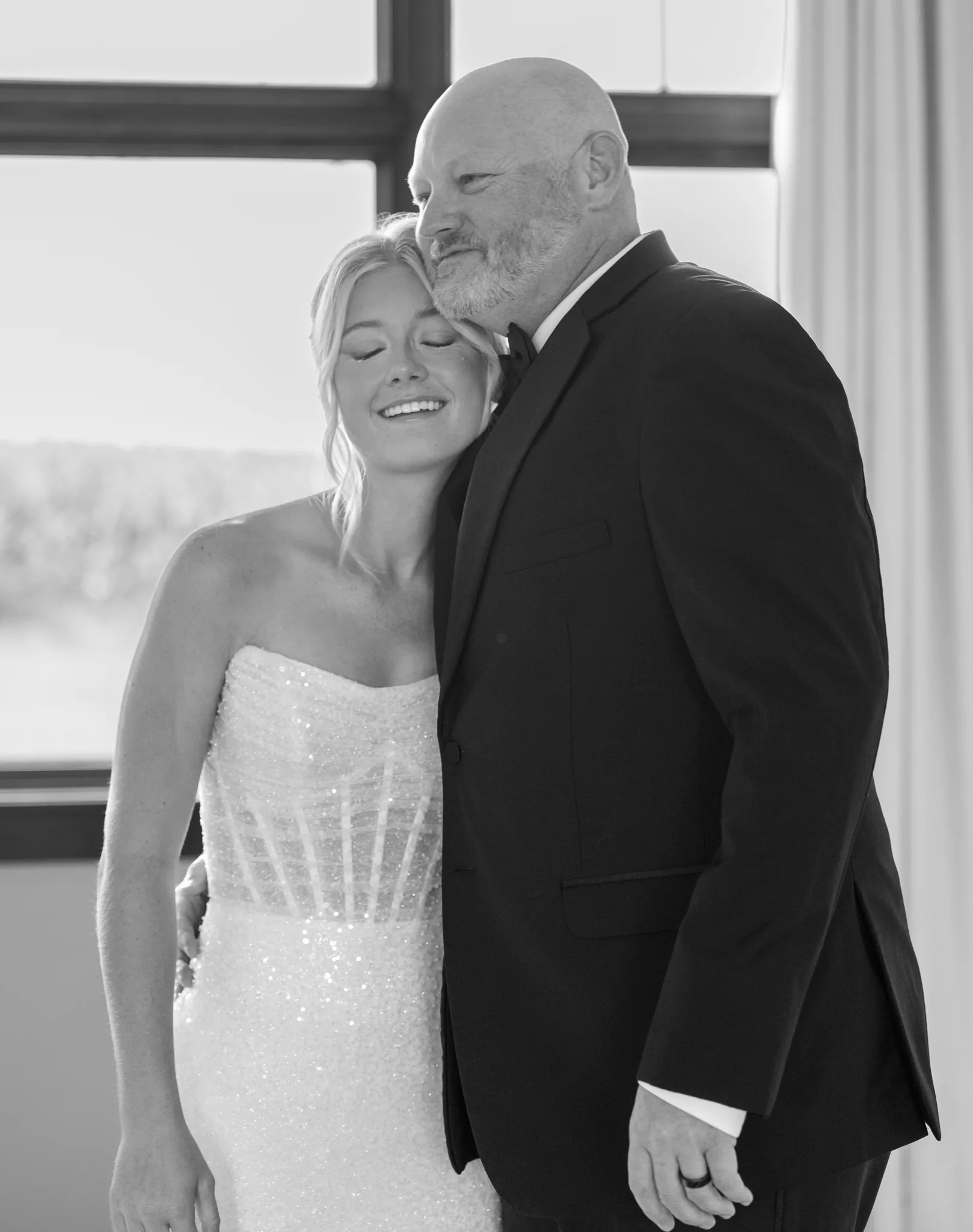
Rylee + Gage · Copperfield Terrace, Plainview, Minnesota
A wedding gallery can show you what happened. Heirloom photography lets you feel it again: your father's hand steadying yours before the ceremony, the way your friends dissolved into laughter at dinner, the quiet breath you took together when the room finally emptied.
Those are not moments that become more meaningful because they are perfectly posed. They matter because they were lived. Years from now, when the timeline has softened and small details have slipped away, photographs can bring back the texture of the day — not only how it looked, but how it felt to be there.
Heirloom Photography Is Made for a Longer Life
Heirloom photography is an approach rooted in longevity. It considers a photograph not as a piece of content for a brief season, but as a personal artifact your future family may hold, study, and recognize themselves in.
That changes the question behind the camera. Rather than asking only, "What will look good right now?" heirloom-minded photography asks, "What will still matter when this moment is part of your family history?" The answer often lives in the in-between: your grandmother watching the first dance, your partner's expression when you are not looking, a child's hand tucked into yours.
This does not mean ignoring beauty, design, or the care you put into your celebration. The flowers, architecture, paper goods, clothing, and table settings are part of the visual language of the day. They deserve to be photographed with attention. But beautiful details have more weight when they are connected to the people who chose them and the life unfolding around them.
A well-made heirloom image has room for both. It can be visually refined and deeply human. It can honor the shape of a dress and the shaking hands fastening its buttons. It can feel editorial without becoming stiff.
The Difference Between Documentation and Preservation
Every wedding photographer documents a day in some form. Heirloom photography goes further by preserving its emotional truth.
Documentation answers practical questions. Who attended? What did the ceremony space look like? Which traditions were included? Those photographs matter, and a complete gallery should hold them. Preservation, however, looks for the meaning beneath the record.
It notices the tension before a parent sees their child dressed for the ceremony. It waits through a toast instead of photographing only the speaker. It recognizes that a blurry, close, imperfectly timed frame may be the one that carries the most feeling because it holds a genuine reaction.
That does not require leaving everything to chance. In fact, the strongest work often comes from a thoughtful balance of guidance and observation. A photographer can place you in beautiful light, offer calm direction when portraits begin, and create space for the photographs that feel polished. Then they can step back when your people gather around you, allowing the story to move without constant interruption.
This hybrid editorial and documentary approach is especially meaningful for couples who do not want to spend their wedding day performing. You should not have to choose between photographs that feel elevated and photographs that feel like you. The goal is not to manufacture emotion for the camera. It is to make space for what is already there.
Why Imperfection Belongs in the Frame
The photographs people return to most are rarely the ones that prove everything went exactly as planned.
They are the images where a veil catches in the wind, someone cries during a speech, a flower girl loses interest in the aisle, or the dance floor becomes joyfully unrecognizable by the end of the night. These moments are not failures of the visual story. They are evidence that a real life was happening inside a beautiful celebration.
Heirloom photography makes room for that reality. It does not turn away from weather, nerves, wrinkled linen, or the happy mess of family gathering in one place. Instead, it pays attention to how those things reveal character.
For a wedding in Iowa or Minnesota, that may mean embracing the sudden change in light before a summer storm or gathering close on a cold fall evening. For a destination celebration, it may mean allowing the landscape to be part of the story without letting it overshadow the people in it. The setting matters, but it is never the whole memory.
Of course, not every imperfect image is meaningful, and not every candid frame should make the final gallery. Discernment is part of the craft. An heirloom collection is carefully edited so that the photographs feel cohesive, honest, and worth returning to. The point is not to preserve every second. It is to preserve the seconds that hold the whole.
What Makes a Photograph Worth Keeping
A photograph becomes an heirloom because of its emotional resonance, not because it follows a trend. Trends can be fun and expressive, but they often carry a shorter lifespan. A current editing style, a popular pose, or a social-media-friendly composition may be right for some clients and seasons. It depends on what you want your images to say years from now.
Timeless does not have to mean formal, muted, or overly serious. It means the photograph has enough honesty and visual clarity to outlast the moment it was made in. It means skin looks like skin, expressions remain recognizable, and the image is not dependent on a novelty to hold your attention.
The same is true for family photographs. A newborn session does not need every blanket smoothed and every hand placed perfectly to become precious. Sometimes the photograph that lasts is the one where a new parent looks exhausted and completely in love. A senior portrait may hold more than a carefully chosen outfit. It can preserve the confidence, uncertainty, humor, and possibility of a person on the edge of a new chapter.
When the work is made with care, the ordinary becomes worthy of keeping. Your kitchen, your front porch, the way your children climb into your lap — these can become part of the visual record your family treasures.
Choosing an Heirloom-Minded Photographer
The right photographer is not simply someone whose portfolio you admire. Their approach should make you feel understood.
Look closely at the moments between the portraits in their work. Do the people appear comfortable? Is there evidence of real connection, not only beautiful styling? Can you imagine your own relationships inside those photographs?
It is also worth asking how they guide a day. Some couples want more structure during portraits; others want only light direction and plenty of room to move. Most need both at different points. A thoughtful photographer will help shape a timeline that protects time for beautiful portraits while leaving enough breathing room for you to be present with your guests.
Ask about the final experience, too. A gallery is valuable, but heirloom photographs deserve a life beyond a hard drive. Prints and albums give your memories a physical presence. They become the images your children point to, the pages you open on anniversaries, and the pieces of your story that remain close even as technology changes.
The investment is not only in coverage on one day. It is in the attention, judgment, and care required to make photographs that continue to speak after the day is over.
Let the Day Be Lived
The most lasting photographs begin with permission: permission to feel the day instead of monitoring it, to laugh loudly, to cry without apologizing, to be close to the people who brought you there.
Plan the details you love. Choose the dress, the place, the music, and the people with intention. Then let the celebration breathe. The photos you will reach for thirty years from now are often waiting in the moments you did not stop to arrange.
Ready to Begin?
Start a Conversation