Posed or Candid
Why the Best Wedding Galleries Are Both
September 23, 2026
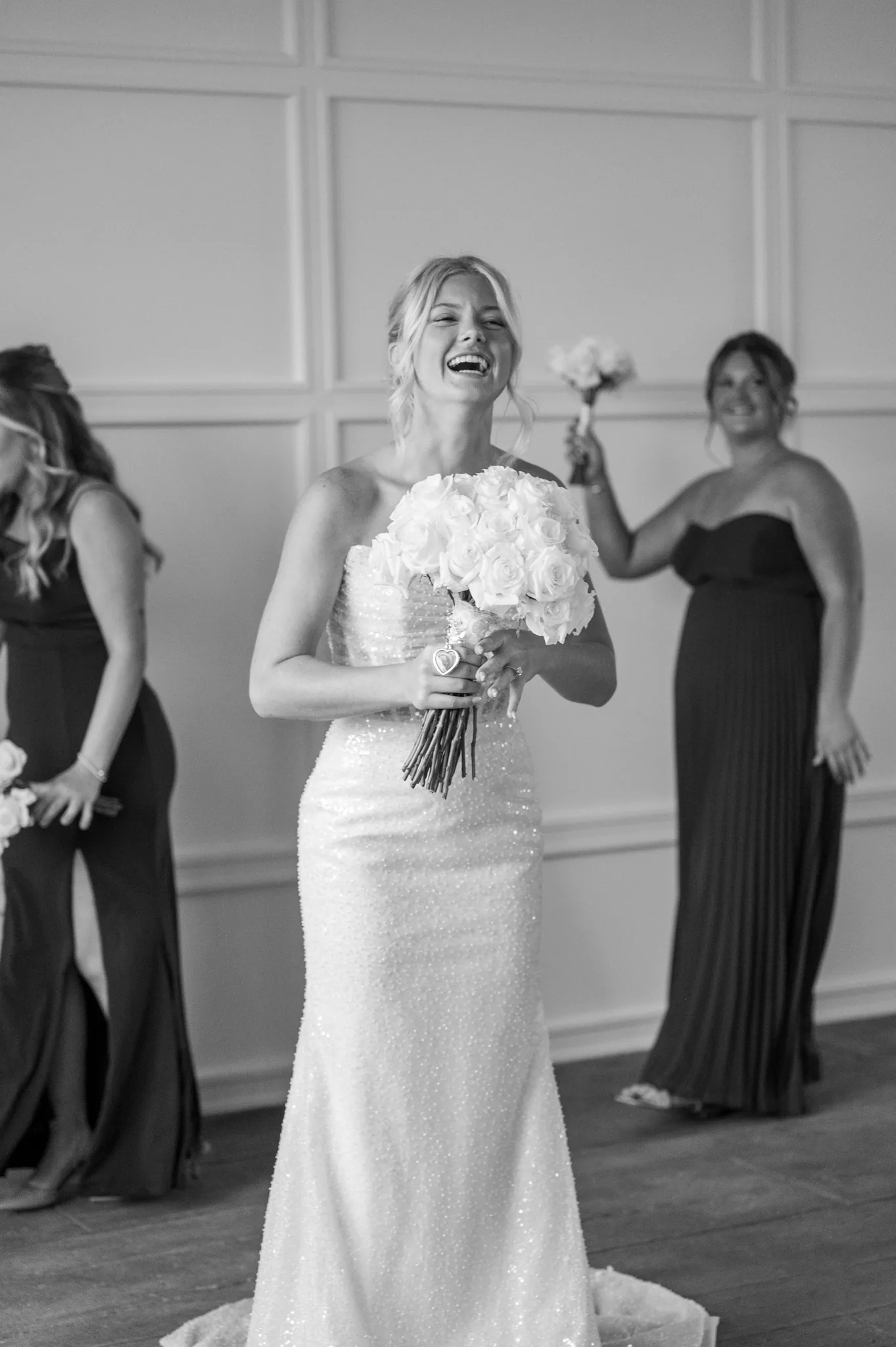
Rylee + Gage · Copperfield Terrace, Plainview, Minnesota
The question of posed versus candid wedding photos often arrives after a couple has spent one too many evenings scrolling through galleries that feel either beautifully polished but impersonal, or full of feeling but visually unfinished. You should not have to choose between photographs that look refined and photographs that feel like your life. The most enduring wedding galleries make room for both.
A wedding day holds more than one kind of memory. There is the quiet anticipation of getting dressed, the way your father looks at you before the ceremony, the architecture you chose so carefully, and the joy that spills out when your friends find the dance floor. Some of those moments need gentle direction. Others are better left untouched. Knowing the difference is where thoughtful photography begins.
Posed Versus Candid Wedding Photos Is Not a Binary Choice
The word posed can bring to mind stiff smiles, rigid shoulders, and a photographer asking everyone to look directly at the camera for far too long. Candid can suggest the opposite: spontaneous, unfiltered images captured from the sidelines. Neither definition tells the whole story.
A strong wedding photograph is often a collaboration between observation and intention. A photographer may place you in beautiful window light, adjust a hand, or suggest that you walk slowly toward one another. Then, in the seconds that follow, something real happens. You laugh because your veil catches in the breeze. You reach for your partner's hand without thinking. Your expression softens when the pressure to perform disappears.
That is not a manufactured moment. It is a real moment given room to happen beautifully.
For couples drawn to an editorial look but wary of spending the day in a photo shoot, this middle ground matters. You can have images with thoughtful composition, flattering light, and artful details without losing the emotional texture of the day.
What Posed Photos Can Preserve
Intentional portraiture creates the photographs that often become framed prints, album spreads, and the images your family reaches for first. These are not simply proof that you wore a beautiful dress or chose a remarkable setting. They are a chance to pause together in the middle of a fast-moving day.
Portraits Give You a Place to Be Present
Most couples have not spent much time in front of a professional camera. Clear, calm direction removes the guesswork. Instead of wondering what to do with your hands or whether you should smile, you have a simple invitation: stand close, look at each other, take a breath, walk together.
The best direction feels less like being posed and more like being guided into a moment. It is specific enough to create ease, but open enough for your natural connection to come through. A portrait can be polished without looking rehearsed.
Family Formals Become Part of the Family Record
There is also a practical kind of posed photograph: the family portrait. These images may not feel as spontaneous as a hug during cocktail hour, but their value grows with time. A well-organized family photo is often one of the few images where generations are together, dressed for an occasion, and fully present.
The key is efficiency. A considered family-photo list, communicated before the wedding, keeps this portion of the day focused and respectful. With a little preparation, formal portraits can take minutes rather than pull you away from your celebration for an hour.
Details Deserve a Considered Frame
Your invitation suite, heirloom jewelry, floral design, and reception space were chosen with care. Photographing them well usually requires a bit of styling and time. These images tell the visual story of your celebration and honor the work that went into creating it.
Still, detail photographs should serve the larger story. They are most meaningful when they feel connected to the people, place, and atmosphere of the day rather than existing as a collection of pretty objects.
What Candid Photos Hold That Portraits Cannot
Candid images carry movement, surprise, and the small gestures you may not see for yourself. They preserve the lived experience of a wedding day: your best friend fixing the back of your dress, a grandparent's hand resting on yours during dinner, the sudden collapse into laughter after the ceremony.
These are often the photographs that reveal the shape of a relationship. Not because anyone is trying to create a perfect image, but because they are fully engaged with one another.
The Unscripted Parts Are Often the Most Personal
No two wedding days unfold in exactly the same way. The people you invite, the music you choose, the weather that arrives, and the private jokes exchanged over dinner all give the day its particular character. Documentary coverage protects that individuality.
A photographer working attentively can anticipate emotional moments without interrupting them. That might mean staying quiet during a first look, watching the edges of the room during toasts, or noticing your parents share a glance during the ceremony. These photographs cannot be recreated on command, which is precisely why they matter.
Candid Does Not Mean Careless
Natural images still benefit from trained eyes. Light, background, timing, and perspective shape whether a moment feels timeless or distracting. A documentary-minded photographer is not merely collecting whatever happens. They are paying close attention, composing quickly, and deciding when to step closer or give a moment more space.
The result should feel honest, not accidental.
How to Plan for Both Without Feeling Photographed All Day
The experience you want begins well before the wedding. If you hope for relaxed, emotionally true images, build a timeline with breathing room. Portraits become more enjoyable when they are not squeezed between a late ceremony, a receiving line, and the start of dinner.
Consider setting aside a dedicated portrait window of 30 to 45 minutes, ideally when the light is soft or when your venue offers a calm, beautiful interior. A first look can create additional time, but it is not required. Some couples prefer the anticipation of seeing each other at the ceremony and can still make space for meaningful portraits afterward. The right choice is the one that feels most like you.
For the rest of the day, let your photographer know which relationships and moments carry particular weight. Maybe your grandmother made your veil. Maybe your college friends have not been in one room for years. Maybe a sibling will give a toast that no one will forget. This context helps a photographer recognize what matters before it passes.
Then give yourself permission to stop searching for the camera. Be with your partner. Stay at the table a little longer. Let the dance floor get messy. The more fully you inhabit the day, the more your photographs will hold.
Questions to Ask Your Wedding Photographer
Rather than asking whether a photographer is posed or candid, ask how they work when you feel nervous in front of the camera. Ask how they approach family formals, how much direction they offer during portraits, and how they document a ceremony or reception without disrupting it.
It is also helpful to look at full galleries, not only highlights. A portfolio may show beautiful golden-hour portraits and emotional candid frames, but a complete gallery reveals how those approaches live together across an entire wedding day. Look for consistency in light, color, and feeling. Notice whether people seem comfortable. Consider whether the images allow you to imagine the experience, not just admire the aesthetics.
For celebrations in Des Moines and beyond, this balance is especially valuable when a wedding includes both intentional design and deeply personal traditions. The photographs should honor the room you built while leaving room for the people who brought it to life.
The Photographs That Last Are Allowed to Be Both
Thirty years from now, you may love the portrait where you look composed, luminous, and entirely yourselves. You may also return to the image of your mother laughing with her head thrown back, or your partner reaching for you beneath a crowded dance floor's lights. One is not more real than the other.
The most meaningful gallery has a pulse. It holds the stillness and the motion, the considered frame and the unrepeatable glance. Choose a photographic approach that gives you gentle guidance when you need it, then trusts your real life to unfold in front of the lens.
Ready to Begin?
Start a Conversation