The Room Goes Quiet
What Wedding Photojournalism Is Really About
September 2, 2026
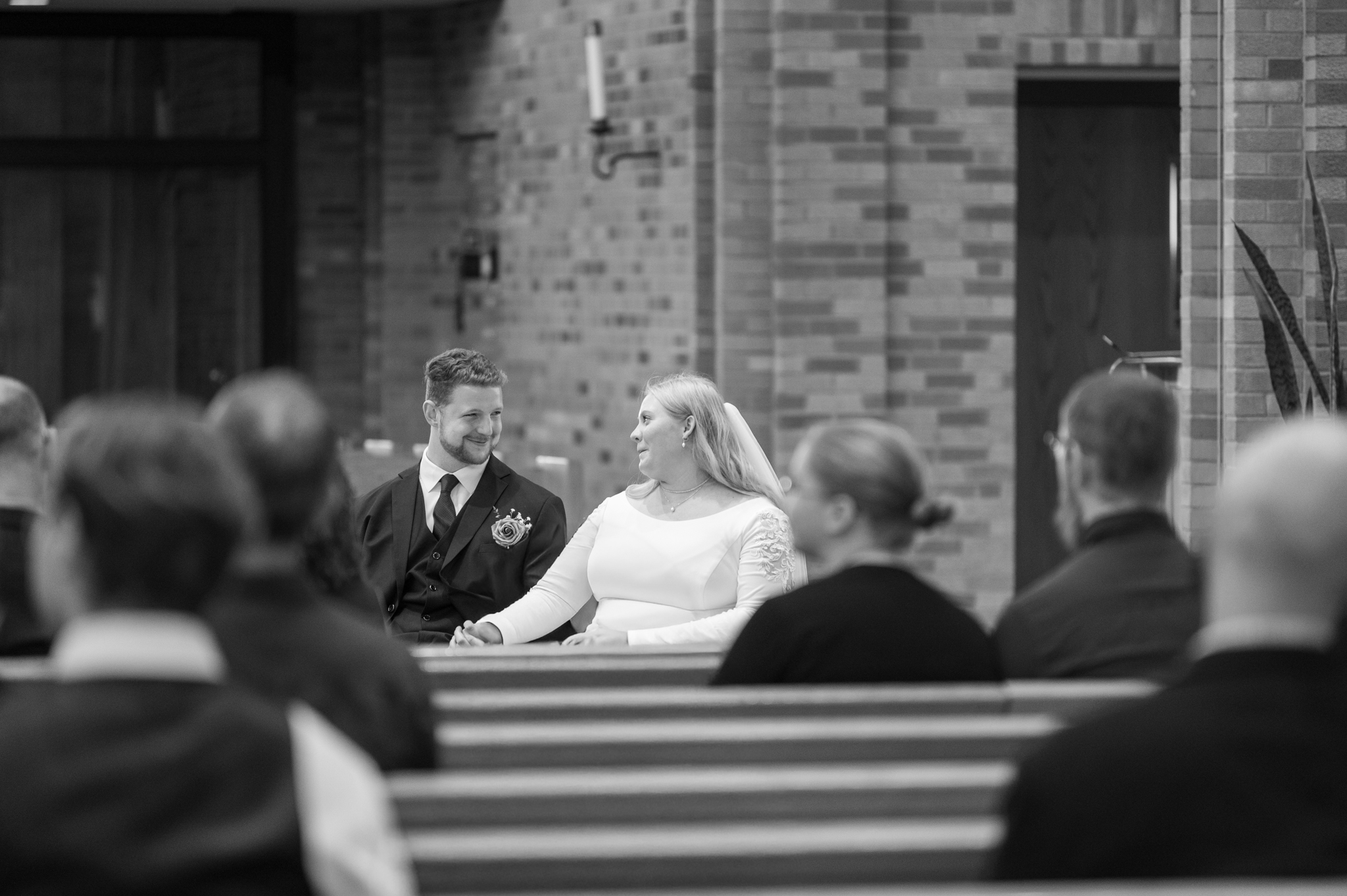
Kamryn & Isaiah · St. Thomas Aquinas, Ames, Iowa
The room goes quiet just before the ceremony begins. Someone smooths your veil. Your partner waits at the end of the aisle, trying not to cry. Your grandmother reaches for a handkerchief before anyone has said a word. These are the moments wedding photojournalism is made for — not because they were choreographed, but because they were true.
A wedding day holds plenty of beautiful things to photograph: thoughtful paper goods, candlelight, flowers chosen with care, the architecture of a room. But the photographs that tend to gather meaning over time are often the ones that hold a feeling. The quick glance across a crowded dinner table. The way your friends lose all composure on the dance floor. Your parents looking at you when they think no one is watching.
Wedding Photojournalism Is More Than Candid Photos
It is easy to think wedding photojournalism simply means a photographer stays in the background and takes candid images all day. Candid photographs are part of it, but the approach goes deeper. It is the practice of paying close attention to what is unfolding naturally, then preserving it with timing, sensitivity, and an understanding of the larger story.
A photojournalistic image does not ask a father to recreate the moment he sees his child dressed for the wedding. It notices the pause before he finds the words. It does not manufacture the laughter during toasts. It anticipates it, watches where the reaction will land, and recognizes that the people listening are often as meaningful as the person speaking.
That does not mean a wedding photographer becomes invisible or leaves everything to chance. The best documentary coverage is deeply intentional. It requires knowing when to step back and when to offer calm direction, where the light will be kind, and how to create enough breathing room for real moments to happen.
The Difference Between Documentary and Editorial Coverage
Couples are often drawn to two things that can seem at odds: they want photographs that feel honest, and they want photographs that feel beautiful. They should not have to choose.
Pure documentary coverage prioritizes observation. It embraces the imperfect, fleeting, unrepeatable parts of the day exactly as they happen. Editorial wedding photography places greater emphasis on composition, light, setting, and gentle direction. It creates images with a polished visual point of view.
A hybrid approach brings those instincts together. During portraits, your photographer may guide you toward flattering light, give you a simple place to stand, and offer prompts that help you settle into each other rather than perform. During the ceremony, cocktail hour, and reception, the attention shifts toward observation: expressions, movement, relationships, and the small changes in a room as the day gathers momentum.
The result can feel composed without feeling stiff. Your gallery may include an artful portrait in the quiet of a hotel hallway, followed by a photograph of your siblings laughing too loudly while someone searches for the missing boutonniere. Both belong. Both tell the truth.
Direction Is Not the Enemy of Honesty
Many people worry that being photographed will make them feel self-conscious. That concern is understandable, especially for couples who do not want their wedding day turned into an all-day production.
Thoughtful direction is often what creates ease. A photographer can help you choose a portrait location that is uncluttered and softly lit, adjust a jacket collar, or tell you what to do with your hands. Then, instead of asking you to hold a smile, they can give you room to talk, walk, breathe, or simply look at one another. The image stays refined, but the interaction is yours.
There is a trade-off to consider. If you want every image to look highly posed and perfectly controlled, a documentary approach may feel too unpredictable. If you never want to pause for portraits, you may miss the opportunity for a few intentional, frame-worthy images of the two of you. Most couples find the sweet spot in a day that makes room for both.
What Wedding Photojournalism Notices
The obvious milestones matter: getting ready, the first look, the vows, family portraits, toasts, and the first dance. A complete visual story also pays attention to what happens around them.
It notices your best friend taking one final look at their speech. It notices the flower girl's shoes kicked off beneath the head table. It notices the aunt who traveled farthest, the friend who gives the biggest hugs, and the way your partner reaches for you in the middle of a crowded dance floor.
These photographs become more valuable with distance. Years from now, the exact shade of a napkin may fade from memory. The image of your dad laughing with his brothers may not. Wedding photojournalism makes space for the people and gestures that give a celebration its particular shape.
This is especially meaningful when loved ones are scattered across states, generations, or seasons of life. For couples celebrating in Des Moines, Minneapolis, or somewhere far from home, the wedding may be one of the rare occasions when everyone is gathered in the same place. Photographs can preserve not just how the room looked, but who filled it.
How to Make Room for Real Moments
The photographs you want are shaped, in part, by how the day is planned. You do not need a rigid schedule or a perfectly quiet bridal suite. You do need enough margin for life to happen without everyone feeling rushed.
Start by protecting time where emotion naturally rises. Consider a few unhurried minutes with your parents while getting ready. Build more than a narrow window for portraits, so you are not forced to choose between photographs and being present. If you are exchanging private vows or letters, choose a setting where you can actually hear each other.
Light matters, too, though it need not dictate every decision. A ceremony near sunset can be beautiful, but so can a midday ceremony in a meaningful church or family property. A skilled photographer works with what is real. The most useful planning conversations balance visual priorities with the experience you want to have.
Let your photographer know who matters most. Share the names of relatives, the friendship that carried you through a difficult year, or the story behind a family heirloom. This is not a request for a checklist of forced moments. It is context. It helps a photographer recognize the significance of a glance that might otherwise pass unnoticed.
Finally, resist the pressure to make every minute look like content. Put the phones away when you can. Stay at the table for an extra conversation. Dance when the song comes on, even if your hair has come loose. The photographs become richer when you are living your day instead of monitoring it.
Choosing a Photographer With a Photojournalistic Eye
When you look through a photographer's work, move beyond the hero images. Beautiful portraits and details are worth noticing, but look for evidence of full stories. Can you feel the energy of a ceremony? Do reception images show guests reacting, not only centerpieces? Are there tender, unscripted moments alongside the polished portraits?
Ask how the photographer approaches family formals, portraits, and the unpredictable parts of a wedding day. A photographer with a photojournalistic eye should be able to explain how they create structure without making the day feel overproduced. They should value efficient family photographs while understanding that people, not logistics, are the heart of the work.
It also helps to choose someone whose presence feels grounding. The person behind the camera will be near you during some of the day's most vulnerable moments. You deserve someone who can offer direction with confidence, move through a room with respect, and recognize when a quiet second needs protecting.
The goal is not a gallery that proves every tradition happened. It is a body of photographs that brings you back to the texture of the day: the nervousness, the relief, the joy, the people who showed up, and the person you chose. Let the timeline leave room for that. Those are the photos you will reach for when thirty years have passed and you want to remember not only what your wedding looked like, but what it felt like.
Ready to Begin?
Start a Conversation