Wear Something You Can Forget About
What to Wear for Your Engagement Session
September 27, 2026
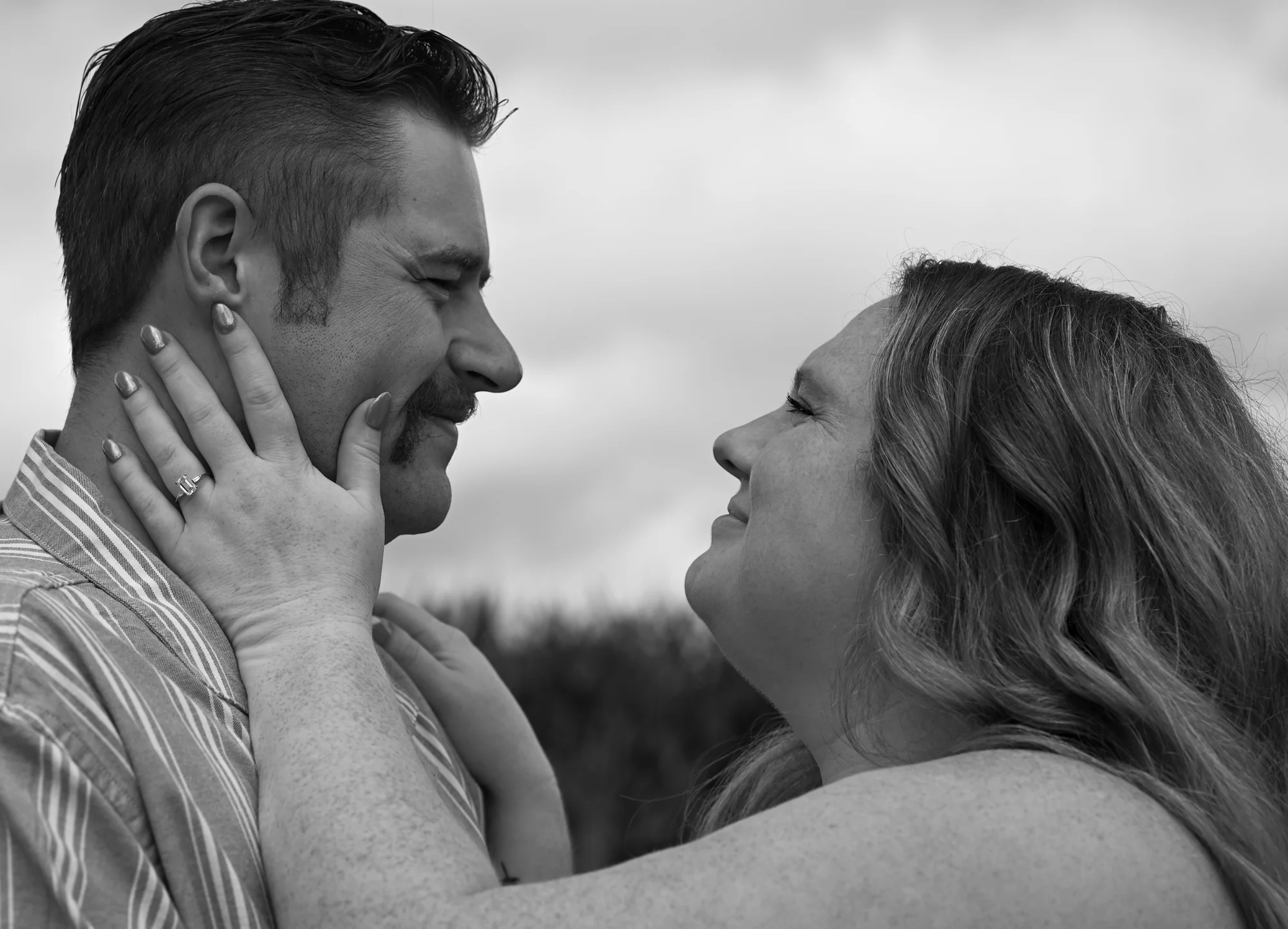
Kelsey + Michael
The best answer to what to wear for an engagement session is not a perfectly coordinated uniform or an outfit pulled from someone else's mood board. It is clothing that helps you recognize yourselves in the photographs years from now: considered, comfortable, and true to the way you move through the world together.
Your engagement session is a small pause in the middle of wedding planning. There is no seating chart, no timeline to manage, no one else asking for your attention. The wardrobe you choose can support that feeling. It should give the images shape and beauty without asking you to perform a version of yourselves that does not feel natural.
Start With the Feeling You Want to Remember
Before choosing a color or shopping for something new, think about the atmosphere you want your photographs to hold. Maybe it is an unhurried afternoon in a place that feels familiar. Maybe it is a dressed-up evening in the city, quiet and cinematic. Maybe you want the images to feel like the two of you on your best ordinary day: warm coffee, a long walk, your hands finding each other without being prompted.
This is more useful than beginning with trends. A tailored suit and silk slip dress can be beautiful for a downtown Minneapolis session or an elegant hotel setting. Worn-in denim, a soft knit, and a beautiful coat may feel more honest on a windy Iowa evening. Neither approach is better. The right choice is the one that gives you room to be close, laugh freely, and settle into the experience.
A good rule is to choose one partner's outfit first, then build the other around it. Start with the piece that feels most distinctly you: a dress with movement, a favorite jacket, a great pair of trousers, or a suit that fits exceptionally well. The second look can complement it through tone, texture, and formality rather than matching it exactly.
What to Wear for an Engagement Session: Choose Harmony, Not Matching
Matching from head to toe can make a photograph feel more like a costume than a memory. Instead, aim for a shared visual language. Think of colors that belong in the same room together: ivory and camel, dusty blue and soft gray, chocolate and cream, muted olive and warm neutrals. These combinations create cohesion while allowing each person to remain distinct.
Neutrals are often a strong foundation because they photograph with ease and keep attention on expression, connection, and light. That does not mean everything must be beige. Deep navy, burgundy, forest green, rust, muted lavender, and faded blue can bring richness without overpowering the frame. The most flattering palette is often one that echoes the season and location while still feeling like your own closet.
Be thoughtful with very bright neons, fluorescent colors, and large high-contrast logos. They can pull focus quickly and may cast unexpected color onto skin. Tiny, tightly patterned prints can also compete with the fine details of a photograph. A subtle floral, a delicate stripe, or an interesting woven texture usually reads beautifully, especially when balanced with a simpler piece on the other person.
Texture is often where an outfit becomes memorable. Linen, silk, wool, suede, cotton poplin, cashmere, denim, and a softly structured knit all add depth without demanding attention. For photographs that feel editorial but still lived-in, texture does much of the work.
Prioritize Fit, Movement, and Comfort
A beautiful garment that needs constant adjusting will show up in your experience. If a neckline shifts when you lift your arms, if trousers pinch when you sit, or if a shoe makes walking difficult, you will be thinking about the clothing instead of each other.
Try on your outfits together before the session. Sit, walk, hug, reach overhead, and stand close. Look at where hems fall and how the colors relate in both daylight and indoor light. This is less about chasing perfection and more about removing small distractions before they become part of the evening.
Movement photographs especially well. Dresses and skirts with a little ease create dimension when you walk or turn toward one another. A coat that can be draped over the shoulders, a blazer with clean structure, or trousers with a relaxed drape can give you natural variety without requiring a full wardrobe change. If you love a more fitted silhouette, choose one that still lets you breathe and lean into your partner comfortably.
Shoes deserve the same attention. They do not need to be formal, but they should suit the location and allow you to move confidently. Heels can be wonderful for a polished city setting, while boots or refined flats may make more sense for grass, gravel, or a long walk. Bringing a simple pair of walking shoes for in-between locations is always a practical choice.
Consider the Location and the Season
Your setting is part of the story, not merely a backdrop. A light, airy outfit may be perfect for an open field at sunset but feel out of place in a moody bar or a historic theater. Likewise, an all-black look can feel striking in an architectural downtown space and overly heavy against a bright summer landscape. Let the location inform your choices without letting it dictate them.
For Iowa and Minnesota sessions, weather is part of the equation. Spring can be green and soft but cool after sunset. Summer evenings are luminous, though humidity may make heavy fabrics less comfortable. Autumn gives you rich color and layers, while winter sessions can be quietly beautiful with tailored coats, gloves, and tactile fabrics.
Kelsey and Michael, pictured at the top of this piece, are a good example of how little it takes. An open field, a softly striped button-down, an overcast sky — and nothing either of them had to adjust once they were standing close. They went on to marry on the land that raised them.
Layers are especially useful in unpredictable weather. A long wool coat, a scarf with subtle texture, or a jacket that complements rather than covers an outfit can give you options while keeping you warm. Choose layers you would be happy to photograph in, not only emergency pieces thrown in at the last minute.
Bring a Second Look Only if It Adds to the Story
Two outfits can create lovely range: one relaxed and personal, one more elevated. Perhaps you begin in denim and knits at a meaningful neighborhood coffee shop, then change into a dress and jacket for the last light of the evening. The contrast can make the gallery feel expansive while still cohesive.
But an outfit change is not required. One thoughtful look, worn well, is more than enough. If changing clothes will make you feel rushed, leave it out. The most lasting photographs come from presence, and presence is difficult to manufacture when you are watching the clock in a parking lot.
If you do bring a second outfit, keep the transition simple. Choose pieces that travel well, avoid items that wrinkle easily, and plan for privacy if the location does not have a changing space. It also helps to make the second look slightly more formal or more relaxed than the first, so it feels intentional rather than like a near-duplicate.
The Details That Quietly Matter
Small choices can help you feel settled without turning the session into an exercise in perfection. Steam clothing before you leave, remove bulky items from pockets, and choose undergarments that work with your outfit. Consider a light touch-up kit for lip color, powder, hair pins, or a lint roller, particularly with darker fabrics or pet hair at home.
Jewelry and accessories should feel like part of your life. An heirloom ring, a watch, earrings you wear often, or a meaningful necklace can add intimacy to the photographs. Avoid adding accessories simply because the outfit seems to need more. Editing is a form of confidence.
Professional hair and makeup can be a worthwhile choice if it helps you feel cared for and camera-ready, but the goal is still to look like yourself. Softly polished tends to age beautifully. If you are trying a new beauty look, test it beforehand rather than making the session the first experiment.
Most of all, give yourselves permission to arrive as you are. Amy Minikus Photo + Film will offer calm direction when it is helpful, then make room for the unscripted glances, private jokes, and familiar gestures that cannot be styled. Wear something you can forget about once you are together. Those are the photographs you will reach for when the details of the day have softened, but the feeling remains.
Ready to Begin?
Start a Conversation