What Will Still Feel Like Yours
The Wedding Photography Trends Worth Keeping
September 17, 2026
A veil lifts in the wind. Your grandmother reaches for your hand after the ceremony. The dance floor becomes a little blurry around the edges because everyone is finally fully there. The wedding photography trends worth paying attention to are not asking couples to trade real feeling for a fleeting look. They are making more room for both: photographs with a point of view, and memories that still feel like yours.
For couples planning intentional celebrations in Des Moines, across the Midwest, or somewhere farther from home, the question is not simply what will look current next year. It is what will hold its meaning after thirty years have passed. The strongest visual choices are the ones that give your day texture without asking you to perform it.
Wedding Photography Trends That Feel Personal
Editorial direction with room to breathe
Couples are drawn to images that feel composed, polished, and considered - the kind that would look at home in print - without wanting a wedding day spent under constant instruction. This has created a welcome shift toward hybrid editorial and documentary coverage.
It might mean a photographer gives clear, calm direction during portraits: where to stand for beautiful light, how to settle your hands, when to turn toward one another. Then, once the moment begins moving, the direction falls away. The resulting gallery has refined portraits alongside the unplanned things that could never be recreated: a parent taking a breath before a toast, the squeeze of a hand beneath the table, friends singing every word at the end of the night.
There is a trade-off here. A highly styled image takes time and attention, while complete spontaneity cannot be scheduled. A thoughtful photography timeline protects space for both. You do not need to choose between beautiful portraits and being present with the people you invited.
Movement over perfect stillness
The stiff, straight-on pose is giving way to photographs that carry a little motion. Walking together after the ceremony, a dress catching air on a staircase, a spin during cocktails, or a close embrace before the reception can create images that feel alive rather than overly arranged.
Movement is not about making every frame blurry or turning portraits into a performance. It is about letting the body do what it naturally does when you are relaxed. A gentle prompt can be more effective than a complicated pose. Talk to each other. Take a slow walk. Let your partner make you laugh. The best result is not an image that announces its trendiness. It is an image that lets you remember how it felt to be there.
Film and film-inspired texture
Film continues to shape the visual language of modern weddings. Its softer contrast, nuanced color, gentle grain, and imperfect edges offer a welcome counterpoint to overly crisp, heavily edited imagery. Many couples are also adding actual film coverage, whether through a photographer shooting medium format, a disposable camera passed among guests, or Super 8 motion footage.
What film offers is not just nostalgia. It asks us to slow down. Each frame feels a little more deliberate, and its subtle unpredictability can make an image feel human.
Still, film is not automatically the right choice for every celebration. It responds differently to low light, changing weather, and fast-moving receptions. If you love its character, consider using it for portraits, details, and daylight moments while relying on digital coverage for the full range of the day. The goal is consistency in feeling, not forcing one medium into conditions where it cannot do its best work.
Flash that feels like the party
Direct flash has returned to receptions in a major way, and for good reason. When used with intention, it brings energy, contrast, and a little late-night confidence to dance floor photographs. It can make a crowded room feel electric and preserve the color, motion, and joyful chaos that ambient light alone may soften.
The important distinction is between flash used as a visual choice and flash used without care. A skilled photographer knows when to preserve the mood of candlelight and when to step in close as the party shifts gears. Both versions of the reception belong in the story. You may want the quiet first dance framed by warm light, then the high-energy photographs of your friends on the dance floor twenty minutes later.
Details with a story behind them
Flat lays and detail photographs are becoming more personal. Rather than collecting items simply because they photograph well, couples are choosing objects that reveal something true: a handwritten note, a grandparent's jewelry, an heirloom handkerchief, the menu from a beloved local restaurant, or flowers selected because they grew in a family garden.
This does not require a long list of props. In fact, fewer meaningful pieces often photograph better than a crowded collection of accessories. Tell your photographer what matters before the wedding day, especially if an item has a story that is not immediately visible. The photograph gains depth when the meaning is known.
The Wedding Photography Trends Moving Beyond the Ceremony
The full weekend as part of the story
More couples are treating the wedding as a gathering rather than a single eight-hour event. Welcome dinners, lake afternoons, post-ceremony cocktails, after-parties, and slow morning brunches are becoming part of the visual record.
This approach is especially meaningful for destination weddings and for couples whose guests are traveling across states or countries to be together. The wedding day holds the formal milestones, but the surrounding hours often hold the intimacy. A friend leaning into you at dinner. Your families meeting over coffee. The exhale after everything is over.
Full-weekend coverage is not necessary for every celebration. If your budget or schedule centers on the wedding day, a few well-protected hours can still tell a complete story. But if connection is the reason you are gathering, it is worth considering whether the moments before and after the ceremony deserve a place in your photographs, too.
More honest getting-ready photographs
Getting ready is becoming less about matching robes and more about the people who help you arrive at the day. These images can be quiet and unguarded: fastening a dress, sharing a private letter, someone fixing a cufflink, a parent standing back for a moment to take it all in.
A beautiful room and thoughtful styling certainly help, particularly for editorial imagery. But emotional ease matters more. Build in enough time that hair, makeup, family, and photography are not competing for the same ten minutes. An unhurried morning gives everyone permission to be themselves, which is often when the most lasting photographs happen.
Black-and-white images with emotional weight
Color tells part of the story: the flowers you chose, the summer light, the blue hour outside the reception. Black and white removes those visual details at just the right moments, drawing attention to expression, gesture, and connection.
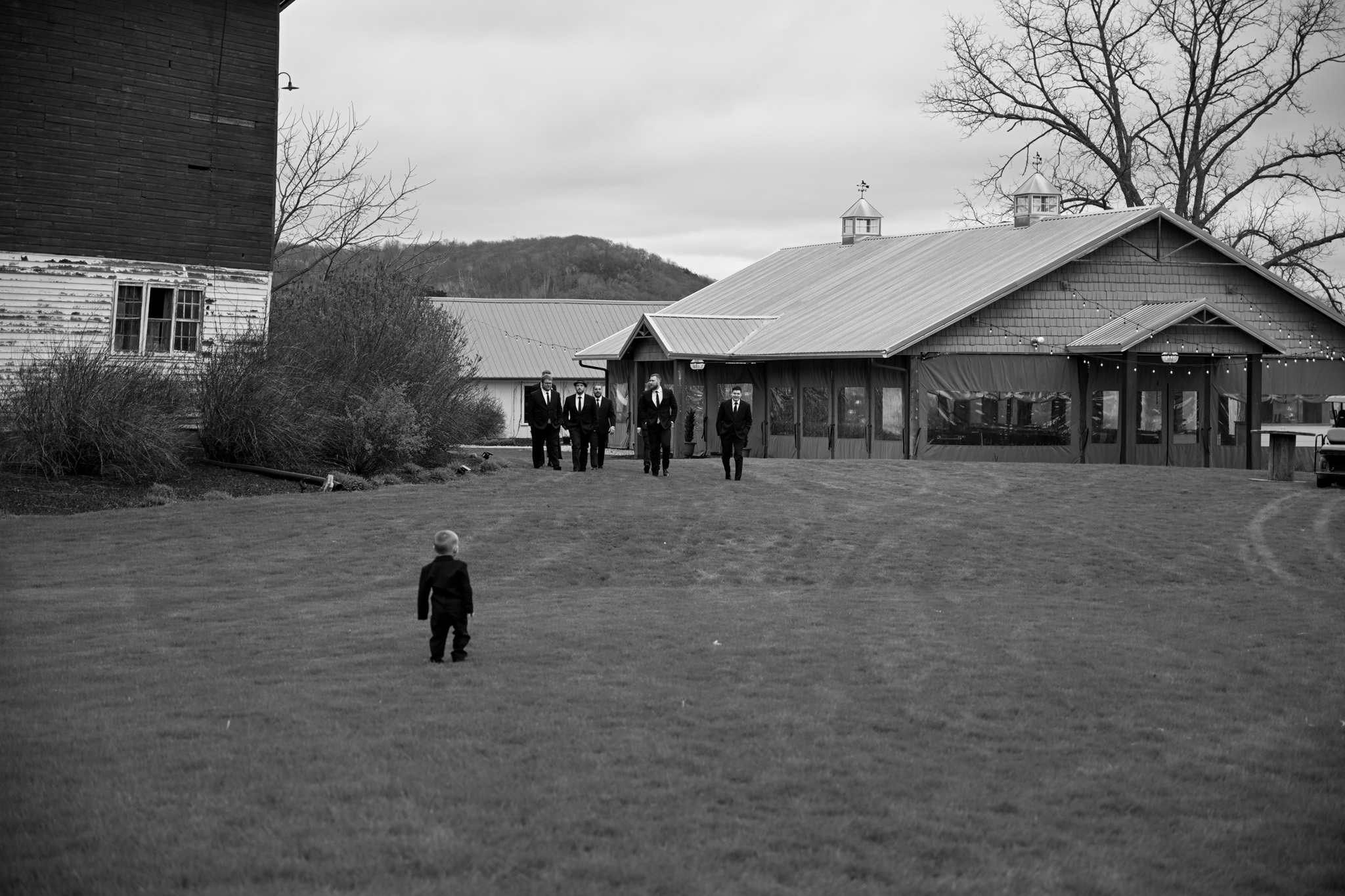
This is why monochrome photographs remain powerful even as color trends shift. They can give a father-daughter dance, a tearful ceremony exchange, or a rain-soaked walk to the car a sense of permanence. Used selectively, black and white is not a retro effect. It is a way of clearing away distraction.
Choose What Will Still Feel Like You
Trends can be useful because they give language to what couples are craving: more presence, more texture, more honesty, and photographs that do not feel interchangeable. But no trend is worth adopting simply because it appears on a mood board.
Start with a few questions. Do you want your portraits to feel quiet and cinematic, playful and energetic, or a little of both? Are you drawn to clean color, film grain, direct flash, or soft natural light? Which people and moments would feel most painful to lose? Your answers should shape the photography experience more than any list of must-have shots.
The photographs you will reach for decades from now may not be the most technically perfect frame. They may be the one where your face folds into laughter, your people gather around you, or the room looks exactly as it felt. Leave room for those moments. They are already happening.
Ready to Begin?
Start a Conversation